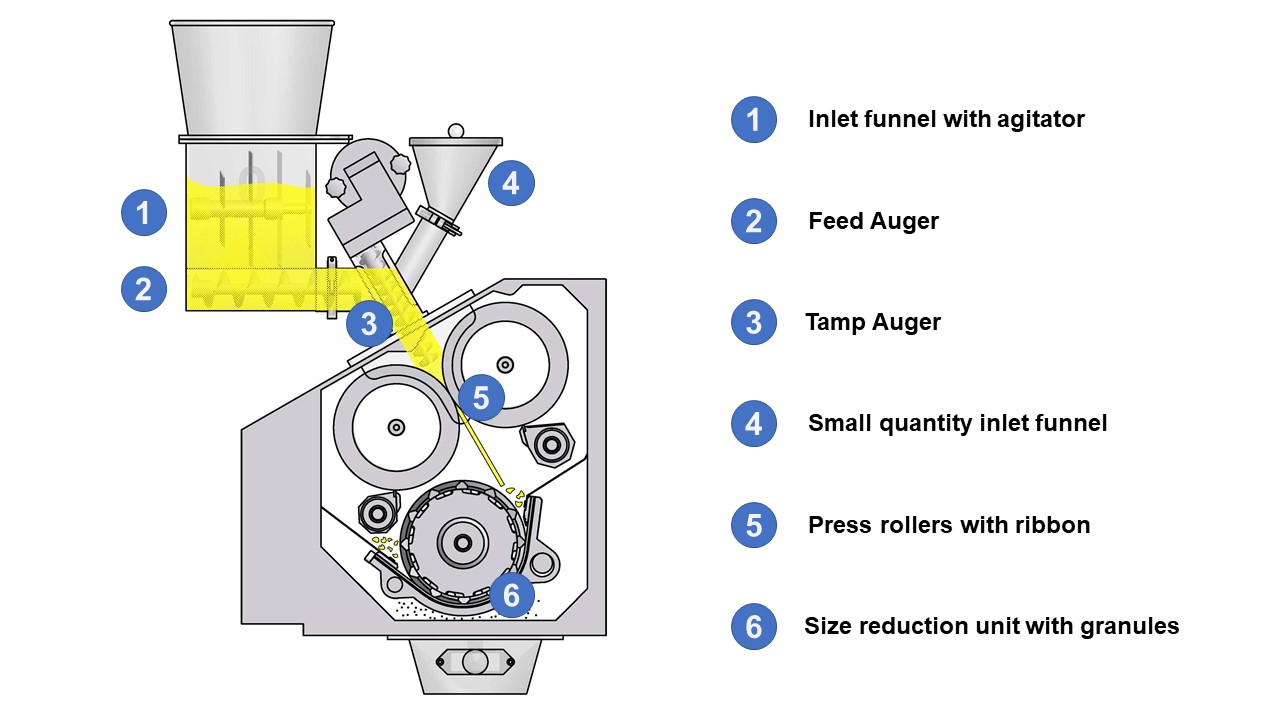
Learn here about the dry granulation principle with a GERTEIS® roller compactor.
Granulation is a process in which powder particles are made to adhere to each other, resulting in larger, multi-particle entities, so called granules. If such a process is performed without adding liquids, this is called dry granulation.
In dry granulation, the powder blend is compacted by applying a force onto the powder, which in general causes a considerable size enlargement.
The compacts obtained are called ribbons, flakes or briquettes.
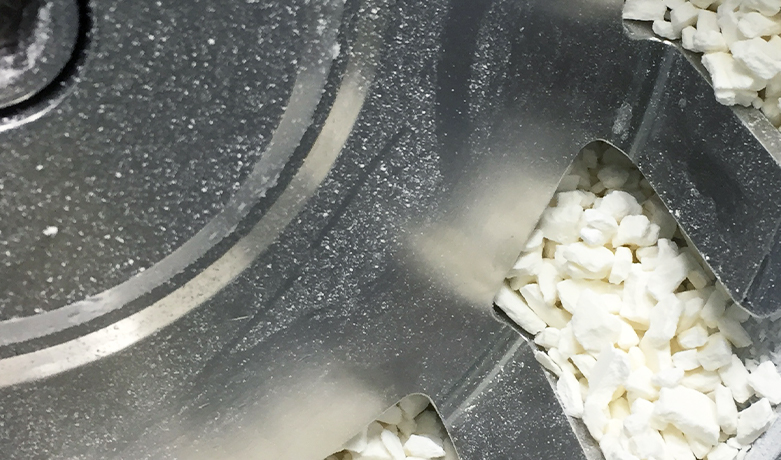
In order to obtain the desired granules, the compaction process is followed by a milling step.
Principally there are two methods to obtain the compacts when using dry granulation: slugging and roller compaction.
If a tablet press is used for the compaction process, the term slugging is used. But since particles with a small particle size do not flow well into the die of a tablet press, resulting in weight differences from one tablet (slug) to another. This in turn causes large fluctuations in the forces applied onto the individual slugs, and variability in the mechanical strength of the slug. Therefore, the properties of these granulates obtained by milling the slugs cannot be controlled.
This is one of the main reasons why slugging is rarely used as a dry granulation method.
A GERTEIS® Roller compactor generally consists of three major units:
A feeding system, which conveys the powder to the compaction area between the rollers
The powder is compacted between two rolls by applying a force, which is the most important parameter in the dry granulation process. The applied force is expressed in kN/cm, being the force per cm roll width. Occasionally the press force is also indicated in bar. This, however, merely represents the pressure within the hydraulic system, and is in fact not an appropriate measuring unit for the force applied onto the powder.
At a given force, depending on the amount of powder conveyed to the rolls, the powder will be compacted to a predefined ribbon thickness.
A precise process control is essential to obtain uniform granule properties from a homogenous ribbon. For more on that topic see section PAT below.
Roller compactors can be divided into two categories: One is equipped with a fixed gap, the other one with a floating gap. Both consist of the three major units as explained above but differ in the way in which the smallest distance (gap) between the rolls is realized.
When a fixed gap is installed, the amount of powder drawn in into the compaction area between the rolls is inconsistent, which results in varying forces applied to the powder bed. Like slugging, this will cause large fluctuations in the ribbon and granulate properties.
With floating gap (e.g. GERTEIS®-Machines) the distance between the rolls change according to the amount of powder provided. The force applied to the powder remains constant. This ensures that property fluctuations in the granules are reduced to a minimum.
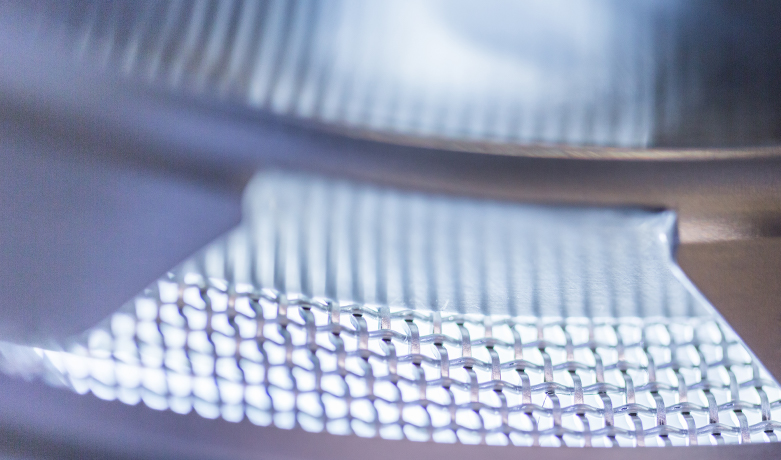
With our integrated models, the ribbons are milled immediately after compaction using a screen with a given mesh size, thus limiting the upper particle size.
This milling process should be performed as gently as possible, so as to avoid creating excess fines.
The GERTEIS® roller compactors are able to control and measure all product quality relevant parameters (e.g. force, gap and roll speed) on-line in order to fulfill the requirements of the pharmaceutical industry for a well-controlled and documented manufacturing process. All the parameters are calibrated and validated. Additionally, in order to cope with batch to batch variations, our machines are fitted with control systems to allow equal granule properties during manufacturing according to PAT.
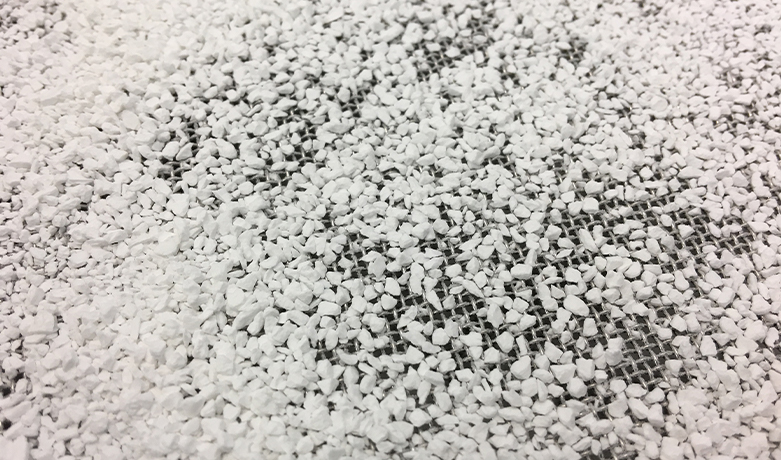
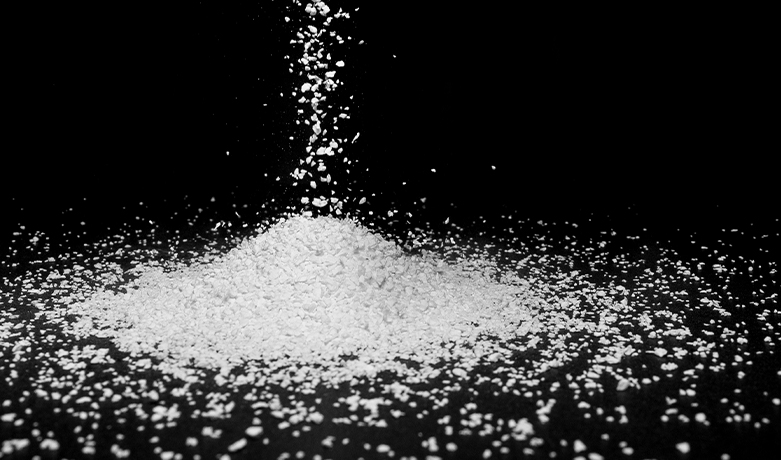
Dry granulation is used for increasing the bulk density of powders, while increasing the particle size, resulting in better flowing material, which is a prerequisite for manufacturing capsules and tablets on high speed production equipment.
Furthermore, bonding the particles of various substances together during the compaction process reduces the tendency to segregation of powder particles of different substances. This results in an improvement of the homogeneity of the active ingredients (API) within the powder blend, causing an improvement of dose uniformity of such dosage forms.
In contrast to wet granulation, dry granulation is a truly continuous process. This results in various economic advantages. Currently the throughput of common dry granulation systems can reach approx. 400kg/h.
Dry granulation systems require lower capital investment in facilities or equipment. This, together with much lower maintenance requirements results in drastically reduced lifecycle costs.
Thanks to countless and ongoing innovations nearly all dry powders can be processed on a GERTEIS® dry granulation system.
Further Advantages of Dry Granulation are:
- Minimal floor space
- Large throughput of material (highly efficient process)
- Truly continuous process
- Highly energy efficient; no heat for drying and no air conditioning required as for other granulation techniques
- Ultra High Containment Options are available to avoid contamination of manufacturing areas and personnel from high potent actives
- Low running costs