This is an excerpt of a joint study by Freeman Technology Ltd. and Gerteis.
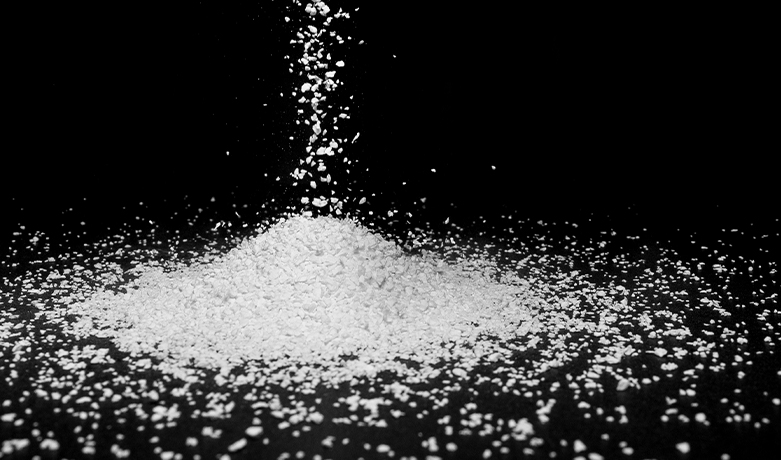
Processing powder blends can present a number of challenges: component powders may be poorly flowing in the process, the blends may be susceptible to segregation, or the formation of agglomerates may affect homogeneity. Granulation is used in a range of industries and applications to combine multiple components of a blend into a more free-flowing, homogeneous intermediate product for downstream processing. It is frequently carried out as a wet process, but the resultant wet mass has to be dried and milled to generate a processable product. This can be time consuming and expensive, and in some cases not possible due to chemical and/or thermal degradation of the active ingredient.
Dry granulation has significant benefits in terms of both processing and cost reduction, and can be used with sensitive materials. However, there is little indication of which process parameters produce optimal granulate quality in order to achieve interruption free processing and high quality products. Most equipment suppliers and product manufacturers therefore rely on historical and ad- hoc trial information to identify suitable parameters.
This application note details the joint study undertaken by Freeman Technology Ltd. and Gerteis Maschinen+Processengineering AG, to investigate how process parameters influenced the properties of the dry granulate of a placebo formulation.
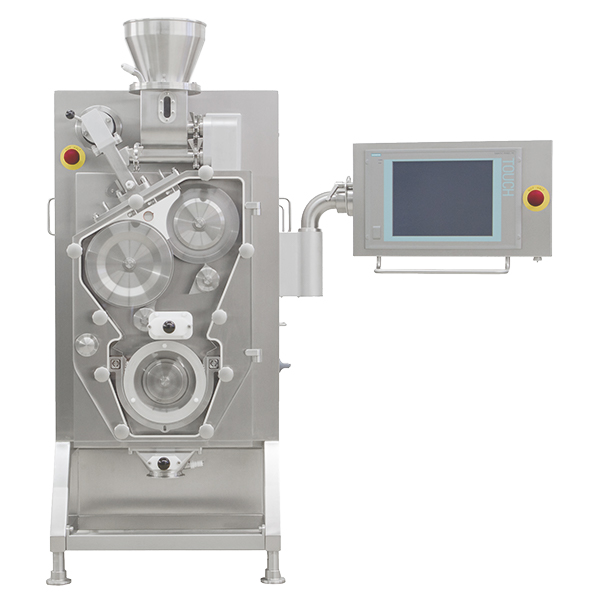
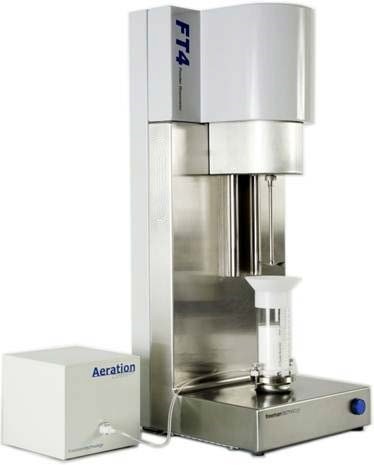
A placebo formulation consisting of 70% lactose, 29.5% microcrystalline cellulose and 0.5% magnesium stearate was granulated using a Gerteis MINI-PACTOR® roller compactor, on which the Roll Gap, Compaction Force and roller speed can be varied together with the screen/sieve size. The resulting granulates were evaluated using a Freeman Technology FT4 Powder Rheometer® to quantify the dynamic, bulk and shear properties.
[...]
Quality by Design dictates that the relationship between materials and processes should be well understood, in order to be able to control and optimise process performance and ensure final product quality. The results generated here demonstrate that it is possible to identify the Critical Process Parameters required to optimise a roller compaction process to produce granules with properties that directly influence performance in downstream operations and Critical Quality Attributes of the final product.
Clear and repeatable trends have been observed in the flow properties measured by the FT4, demonstrating how rheological properties of the granules are predictably influenced by the process parameters. The Permeability, Compressibility and Conditioned Bulk Density of the samples exhibited robust correlations with modes of operation of the roll compactor, with the overall suggestion that a combination of smaller Roll Gap and higher Compaction Force is more likely to result in more uniform/consistent granules which form a more efficiently packed powder bed typically associated with free-flowing powders.
This study indicates the value of powder rheology in a comprehensive, multivariate approach to powder characterisation. Flowability is not a fundamental material property, but instead reflects how multiple properties contribute to the overall ability of a powder to perform in a specific piece of equipment. Subtle variations in an individual property may lead to a noticeable difference in process performance, meaning that several characterisation methodologies are required, the results from which can be correlated with process ranking to produce a design space of parameters that correspond to acceptable process behaviour.
Get in contact with us!
Contact